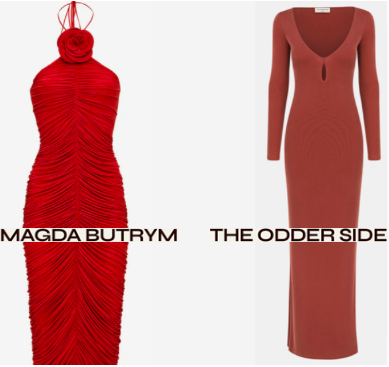
*The Sculpted Dress vs The Effortless Dress* Magda Butrym × The Odder Side
One product category / two definitions of sensuality:
sensuality as control and form,
and sensuality as ease and naturalness.
FICTIONAL EVENT CAMPAIGN
Magda Butrym
CORE IDEA
One Dress. One Woman. One Space.
This is not a fashion show.
It is an exhibition of the process of shaping the feminine form.
A Magda Butrym dress becomes the exhibit, while the visitor’s body becomes its living vessel.
SPACE / SCENOGRAPHY
The event space is conceived as a hybrid between a sculptor’s atelier, a white-cube gallery, and a minimalist laboratory of form.
Spatial Characteristics:
raw white walls reminiscent of a contemporary art gallery
central exhibition chambers, with each dress occupying its own dedicated niche
absence of decoration — every element serves the object on display
cool, controlled lighting that emphasizes shape, texture, and silhouette
an atmosphere of stillness, precision, and contemplation
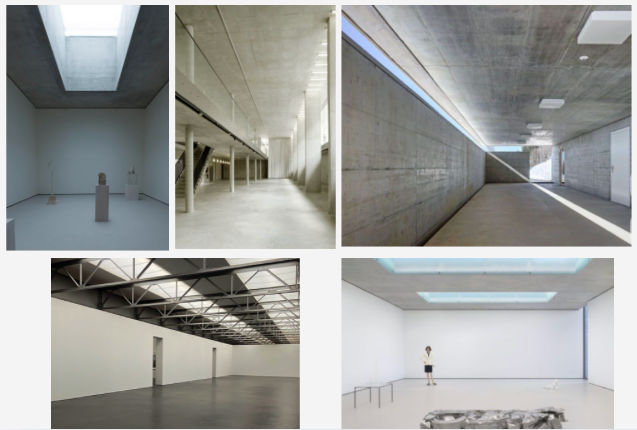
The guest does not enter an event. The guest enters a space dedicated to observing form.
Every dress is treated as a sculptural object. Every movement becomes part of the exhibition. The boundary between fashion, body, and artwork gradually disappears, leaving only the relationship between structure and femininity.
LIGHTING
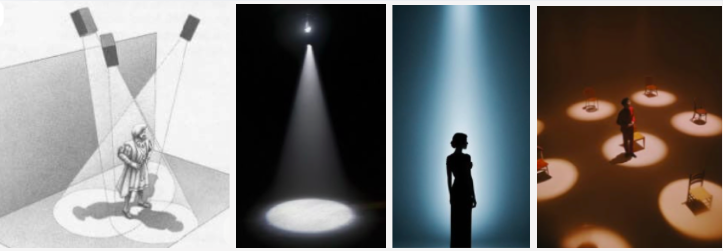
focused studio spotlights
sharp shadows accentuating the silhouette's contours; light used as a sculpting tool
each dress presented on its own dedicated light stage
controlled illumination designed to reveal structure, texture, and form
dramatic contrast between light and shadow to emphasize the garment’s architectural qualities
gallery-like atmosphere where lighting directs the viewer’s attention with precision
PERFORMANCE / THE DRESS EXPERIENCE
*The Moment of Construction*
At the centre of each zone stands a single dress.
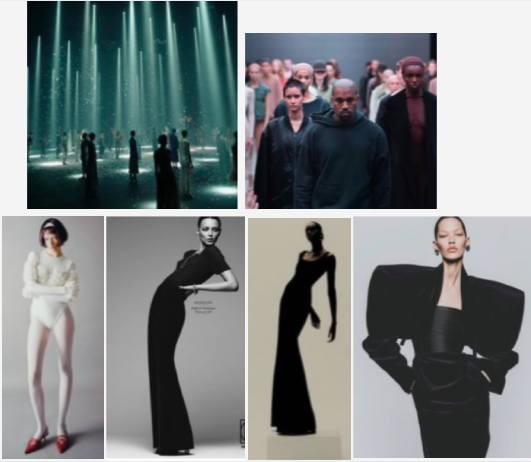
the model remains still, like a sculpture
styling is controlled, deliberate, and static
an assistant subtly "constructs" the silhouette on the body through minimal, ritualistic movements
guests witness the transformation from body to form
models shift positions like rotating sculptures in a gallery
movements are slow, geometric, and intentional
models pause in carefully composed poses, becoming part of the exhibition itself
Dressing is not presented as styling. It is portrayed as a process of constructing silhouette, presence, and form.
*Controlled Intimacy*
the audience remains close to the installation, yet always within a framework of control
no crowds; entry is limited to small groups
circulation follows curated pathways, similar to a museum experience
movement through the space is intentional and carefully paced
every viewpoint is framed by the architecture itself
guests are guided to observe rather than consume
the relationship between viewer, body, and garment is choreographed through spatial design
The audience does not simply attend the event. They move through a sequence of curated perspectives, where each encounter with the dress feels deliberate, intimate, and composed.
The Event Redefines
fashion show → exhibition format
dress → sculptural object
model → living installation
audience → observer of form construction
The concept shifts fashion from performance to observation.
Storytelling
Announcement
The Sculpted Dress Room invites guests into an immersive exhibition exploring the relationship between body, form, and construction. Centered around a single Magda Butrym dress, the experience examines femininity not as decoration, but as architecture.
Inside a sequence of gallery-like spaces, visitors encounter the dress through light, shadow, and movement. The silhouette is revealed as a process rather than a finished image - shaped, refined, and continuously constructed.
This is not a fashion show. It is an exploration of form. A study of how fabric can hold tension, emotion, and intention. A space where the body becomes sculpture and the dress becomes its language.
Reflection
The Sculpted Dress Room was created to slow down the act of looking. In a culture driven by immediacy, the exhibition invited visitors to observe a dress not as an object of consumption, but as an object of contemplation. Through controlled light, stillness, and proximity, the project revealed the invisible decisions behind construction: every fold, seam, and proportion contributing to a deliberate visual language.
The event highlighted a defining aspect of Magda Butrym’s design philosophy: femininity as something shaped with intention. Rather than presenting clothing as adornment, the exhibition framed it as a medium through which form and emotion coexist.
What remained after the experience was not a single image, but a deeper awareness of the relationship between body, garment, and design.
Legacy
Months after the exhibition, its central question remains relevant: what happens when fashion is approached as sculpture?
The Sculpted Dress Room proposed that luxury lies not only in material, but in attention. Attention to construction. Attention to silhouette. Attention to the emotional impact of form.
The project transformed a single dress into a study of presence and precision, reminding us that some garments are not simply worn - they shape the way we inhabit space.
In doing so, the exhibition reinforced Magda Butrym’s vision of contemporary femininity: confident, intentional, and carefully constructed.
THE ODDER SIDE
CORE IDEA
One dress. One woman. One uninterrupted environment.
This is not an exhibition of fashion. This is an observation of clothing dissolving into lived reality.
The Odder Side dress is not presented. It is activated by life itself - light, wind, movement, time.
SPACE / CONTEXT
*No Venue, Only Continuum*
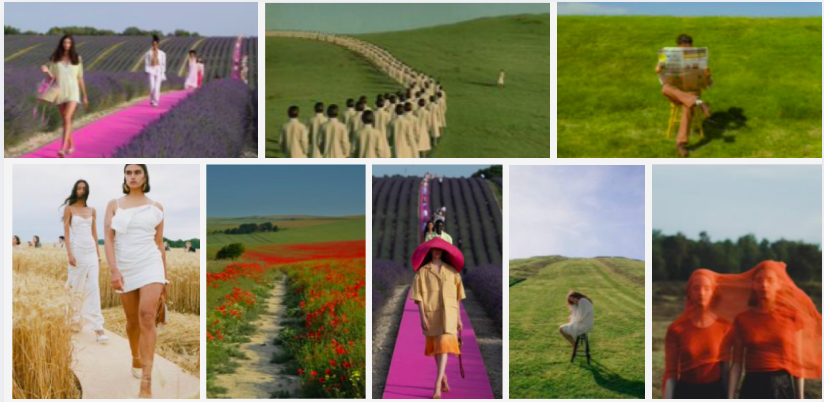
Only a continuous natural setting:
coastline that extends beyond the frame
open field without boundaries
water horizon with no fixed center
transitional environments (wind / sand / grass / light)
nothing is staged; nothing is contained; nothing is framed in advance
Space is not designed. Space is encountered.
LIGHTING
*Time as Creative Director*
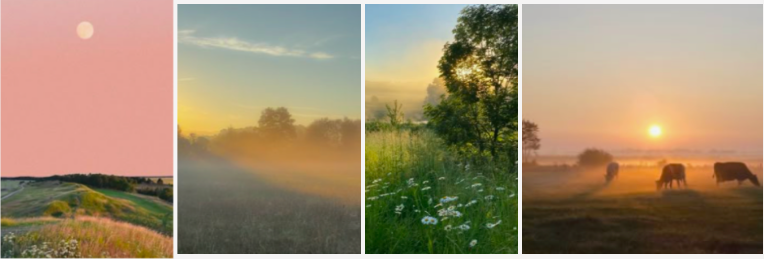
Light may replace scenography:
sunrise = softness, intimacy, emergence
midday = clarity, exposure, honesty
golden hour = emotional saturation, warmth
dusk = disappearance, fading presence
the same dress becomes multiple visual states without changing anything
Light is not controlled, it is experienced.
*Clothing as a Living Condition* / THE DRESS EXPERIENCE
The dress is not an object to be shown. It is:
carried by wind
shaped by movement
softened by body temperature
redefined by posture and pace
The model does not pose. She:
walks
stops without instruction
sits, lies, turns away
becomes part of the landscape rhythm
There is simplest possible choreography. And conditions: wind, terrain, gravity, instinct
The dress is never fixed; it exists only in transition
Movement is not designed; it is allowed. The model is not performing femininity.
The audience becomes:
a witness moving through space
a collector of unrepeatable fragments
an observer of accidental beauty
The dress is not structured against the body. It:
reacts to air flow
absorbs environmental movement
loses and regains shape continuously
behaves like a second layer of weather
No final image is defined. Only residue: a feeling that something was briefly there, and is no longer fixed.
The Event Redefines fashion not as presentation, but as coexistence with environment. It shifts the dress from a designed object into a responsive condition of life.
Fashion show → lived experience
The runway disappears.
Model → presence in motion
There is no performance of identity.
Space → environment, not set
Architecture is removed entirely. Space is not constructed
Image → accident of reality
Nothing is composed to be perfect.
Storytelling
Announcement
What happens when a dress is allowed to simply exist?
The Dress That Disappears Into Life is an outdoor experience exploring clothing beyond presentation. Set within an open landscape shaped by light, wind, and movement, the event follows a single dress through changing conditions rather than staged moments.
There is no fixed perspective.
Instead, guests are invited to observe how the garment responds to life itself - shifting with the body, interacting with the environment, and evolving throughout the day.
At its core, the project reflects The Odder Side’s belief that style is not constructed. It is lived.
Reflection
The Dress That Disappears Into Life challenged the traditional relationship between fashion and control.
Rather than directing attention toward a perfect image, the event celebrated spontaneity. Wind altered silhouettes. Light changed textures. Movement transformed the dress continuously.
The experience revealed that beauty often emerges from conditions we cannot fully orchestrate. By removing the framework of performance, the project encouraged guests to engage with clothing as something fluid and deeply connected to everyday life.
The result was a portrait of femininity rooted not in spectacle, but in authenticity.
Legacy
Long after the event ended, no single image defined the experience.
What remained was a feeling - a memory of movement, warmth, light, and presence.
The Dress That Disappears Into Life demonstrated that fashion can be most powerful when it stops asking for attention and starts participating in life. By embracing imperfection, unpredictability, and natural rhythm, the project captured the essence of The Odder Side: effortless, instinctive, and genuinely lived.