*The Remembered Bag vs The Invisible Bag* Chylak × Balagan
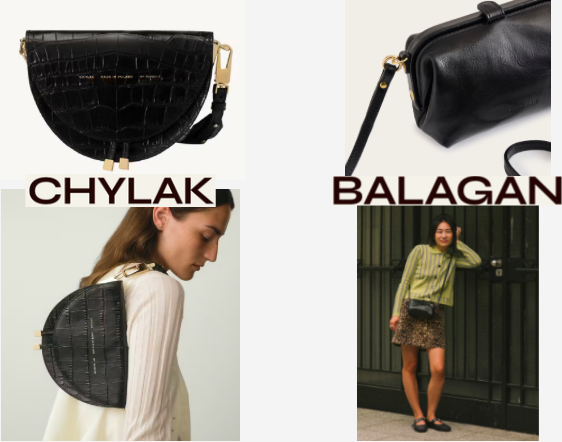
CHYLAK
FICTIONAL EVENT CAMPAIGN /*THE BAG THAT REMEMBERS*
CORE IDEA
A Chylak bag is not defined by ownership or function.
It is defined by time embedded in making and memory embedded in material.
This is not a product presentation.
This is an exhibition of the bag as an emotional archive in formation.
SPACE / SCENOGRAPHY *THE SEWING ROOM OF MEMORY*
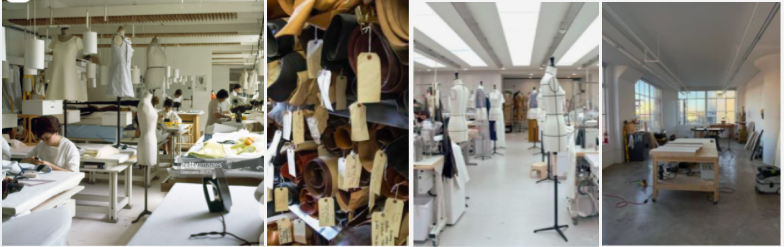
The space is intimate, functional, and process-driven.
small-scale sewing room, not designed as a showroom
wooden cutting table at the center, visibly used
rails with bags in different stages of completion
leather offcuts, sketches, pattern fragments left in place
tools visible, never hidden
Nothing is staged as finished. Everything feels temporarily paused. The space feels like a thought process still happening in material form.
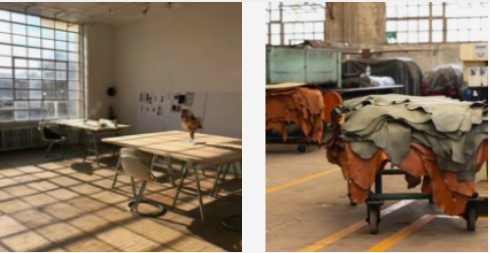
LIGHTING
*WORKING DAYLIGHT*
soft natural light, diffused through fabric or imperfect windows
no theatrical contrast or spotlighting
shadows of tools and materials gently layering surfaces
*THE BAG IN BECOMING* THE OBJECT EXPERIENCE
The bag is never presented as final. It appears as:
partially assembled structure
finished object placed next to raw materials
stitching experiments still visible
variations of the same form across stages
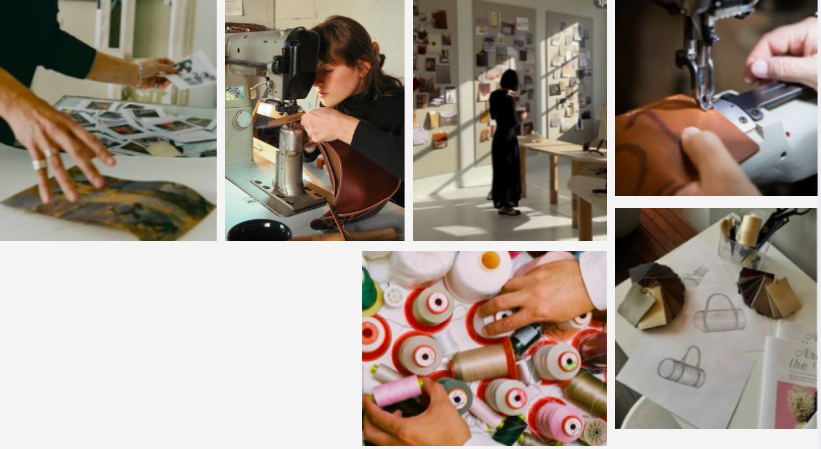
There is no performance in the traditional sense. Only:
implied human presence
traces of recent making
minimal, almost invisible movement of hands in the space
close access to objects, but no over-styling
nothing elevated on pedestals
everything placed at working height
perception guided by process logic, not display hierarchy
The viewer does not witness a show. They enter a paused system of creation.
EMOTIONAL CONSTRUCTION
leather treated as evolving surface, not luxury finish
stitching visible as narrative structure
imperfections accepted as part of memory formation
material treated as record of human action
THE EVENT REDEFINES:
Bag → Processed Memory Object
The bag is no longer a finished product. It becomes a record of how it was made, interrupted, and re-formed over time.
Product → Temporal Construction
Value is no longer located in the final object. It exists in the accumulation of making, stitching, and material decisions.
Craft → Visible Thinking
Craft is not hidden behind perfection.
Space → Working Memory Environment
Viewer → Reader of Material Traces
The audience interpret traces of process embedded in material reality.
Objecthood → Becoming, Not Completion
The object exists in a continuous state of “not yet finished” remembrance.
Storytelling
Announcement
Before a bag becomes an object, it is a process.
The Bag That Remembers opens the doors to a sewing room suspended between creation and completion. Through sketches, leather fragments, unfinished forms, and finished pieces, visitors are invited to experience the hidden stages of making.
Rather than presenting products as finished outcomes, the exhibition focuses on the traces left behind by craftsmanship. Decisions, revisions, and gestures embedded within material.
At the center of the experience is a simple question: can an object remember how it was made?
For Chylak, the answer lives in every stitch.
Reflection
The Bag That Remembers transformed the making process into the subject itself.
Throughout the exhibition, visitors encountered bags not as isolated luxury objects, but as carriers of material memory. The sewing room revealed the relationship between craftsmanship and time, exposing the stages that are often hidden behind finished products.
By presenting objects alongside their origins, the project emphasized that value is created not only through design, but through the accumulation of decisions, labor, and attention.
The exhibition celebrated the quiet intelligence of making and the emotional depth that emerges when an object is allowed to carry traces of its own creation.
Legacy
The Bag That Remembers proposed a different definition of luxury.
Not exclusivity. Not novelty. But continuity.
The project explored how objects acquire meaning through process and how craftsmanship becomes a form of memory preserved in material. Every cut, every adjustment, every visible trace contributed to a larger narrative about longevity and care.
The exhibition left behind a simple idea: some objects are remembered not because they are extraordinary, but because they reveal the human hands that shaped them.
BALAGAN STUDIO
FICTIONAL EVENT CAMPAIGN / *THE BAG THAT DISAPPEARS*
CORE IDEA
A Balagan bag is not an object to be observed.
It is an object designed to dissolve into everyday behaviour.
This is not an exhibition. This is an observation of disappearance through use.
SPACE / SCENOGRAPHY *THE LIVING INFRASTRUCTURE*
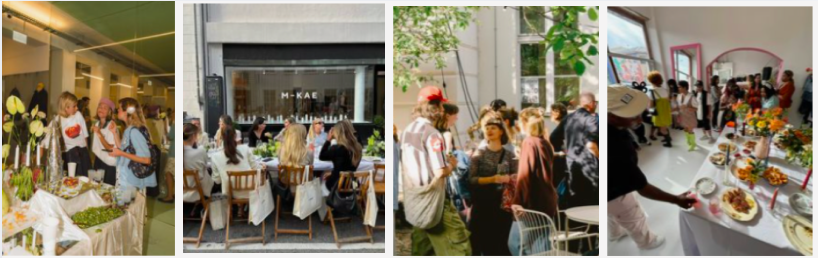
The space is not a showroom. It is a functional environment:
hybrid of apartment, passage space, and urban interior
tables, chairs, floors used as part of the display system
no separation between object and environment
open circulation with no focal point
LIGHTING
natural, ambient lighting
mixed sources (window light, interior spill, street reflection)
no controlled spotlighting
visual hierarchy intentionally removed
Nothing is visually prioritized. Everything is simply present.
ORDINARY MOVEMENT
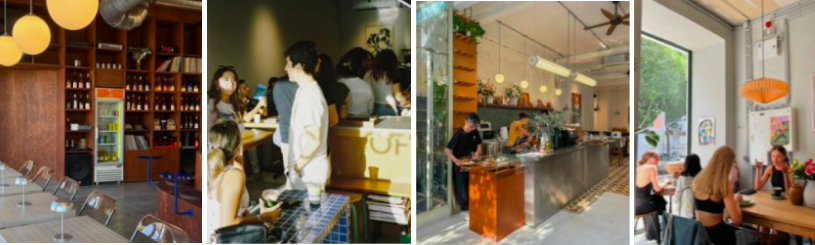
Participants are not guided. They:
move naturally through space
interact with objects unconsciously
do not distinguish between installation and environment
no central composition
no curated viewpoints
fragments of objects appear and disappear
perception is accidental rather than directed
The less you notice it, the more it becomes part of you.
THE EVENT REDEFINES
Bag → Functional Presence Without Attention
The bag is no longer an object to be seen.It becomes something that operates within life without demanding perception.
Product → Everyday Infrastructure
Value is no longer expressive or aesthetic.
Design → Invisibility Strategy
Design is not about visibility or statement. It becomes a system of reduction, neutrality, and disappearance.
Space → Continuation of Life
The environment is no longer staged for observation.
Viewer → Unconscious Participant
The audience does not “watch” the object. They interact with it without framing it as an object at all.
Objecthood → Use Over Presence
The object only exists through interaction.
Storytelling
Announcement
The Bag That Disappears is an experiential installation exploring how design integrates into everyday life. Set within a fluid environment that resembles neither gallery nor showroom, the project follows a single bag as it moves through ordinary routines.
There are no pedestals, no central displays, and no prescribed paths.
Instead, visitors encounter the object as they would in daily life: carried, placed, used, and forgotten.
The exhibition asks us to reconsider visibility as a measure of value and proposes a different perspective - one where great design becomes invisible through usefulness.
Reflection
The Bag That Disappears shifted attention away from the object itself and toward the behaviors surrounding it.
Throughout the experience, visitors interacted with bags naturally and often unconsciously. The installation removed the traditional hierarchy between product and environment, allowing design to function as part of life rather than as its focal point.
In doing so, the project highlighted a key aspect of Balagan’s philosophy: simplicity is not the absence of design, but its highest refinement.
The event demonstrated that an object does not need to dominate attention to become essential.
Legacy
The Bag That Disappears explored a paradox of contemporary design: the more seamlessly an object integrates into life, the less visible it becomes.
Rather than celebrating attention, the project celebrated usefulness. Rather than creating memorable spectacle, it focused on creating lasting relevance.
The exhibition ultimately reframed luxury as ease, the quiet confidence of an object that fulfills its purpose without demanding recognition.
Sometimes the most meaningful design is the design that disappears.